News
The International Conference of IFToMM Italy held in Umbria for the first time. Three days of scientific exchange organised by the University of Perugia, featuring 130 research contributions
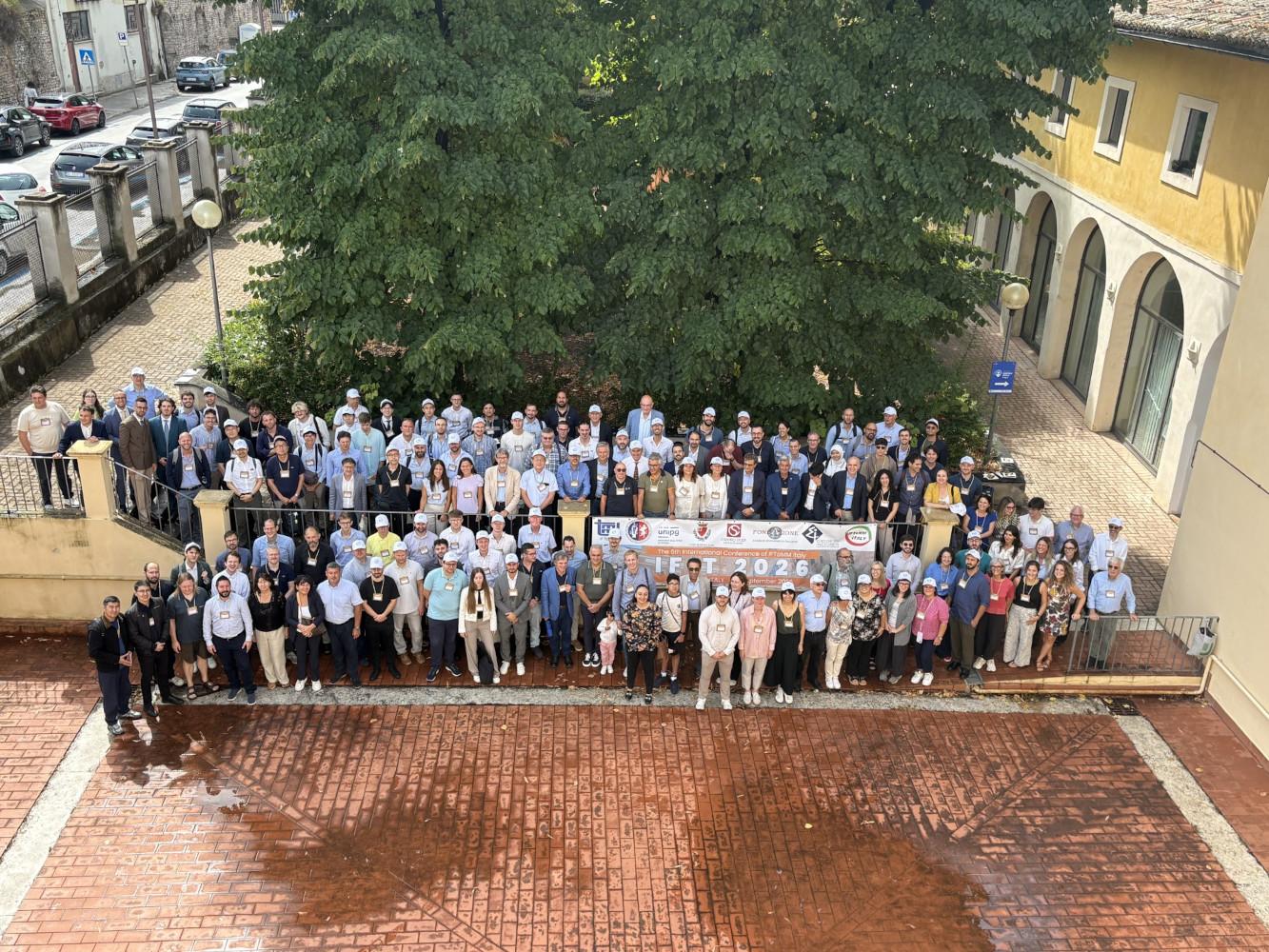
Over 160 researchers from 13 countries and 130 scientific contributions: these are the key figures of the sixth edition of IFIT – International Conference of IFToMM Italy, which brought together the international scientific community working in the fields of Applied Mechanics, Mechanisms and Machine Science in Foligno from 9 to 11 September 2026.
Held in Umbria for the first time, the conference was organised under the leadership of prof. Maria Cristina Valigi, Conference Chair, and prof. Silvia Logozzo, Conference Secretary, both from the Department of Engineering of the University of Perugia. The event was held under the auspices of IFToMM World – International Federation for the Promotion of Mechanism and Machine Science, the international federation of which IFToMM Italy is a member.
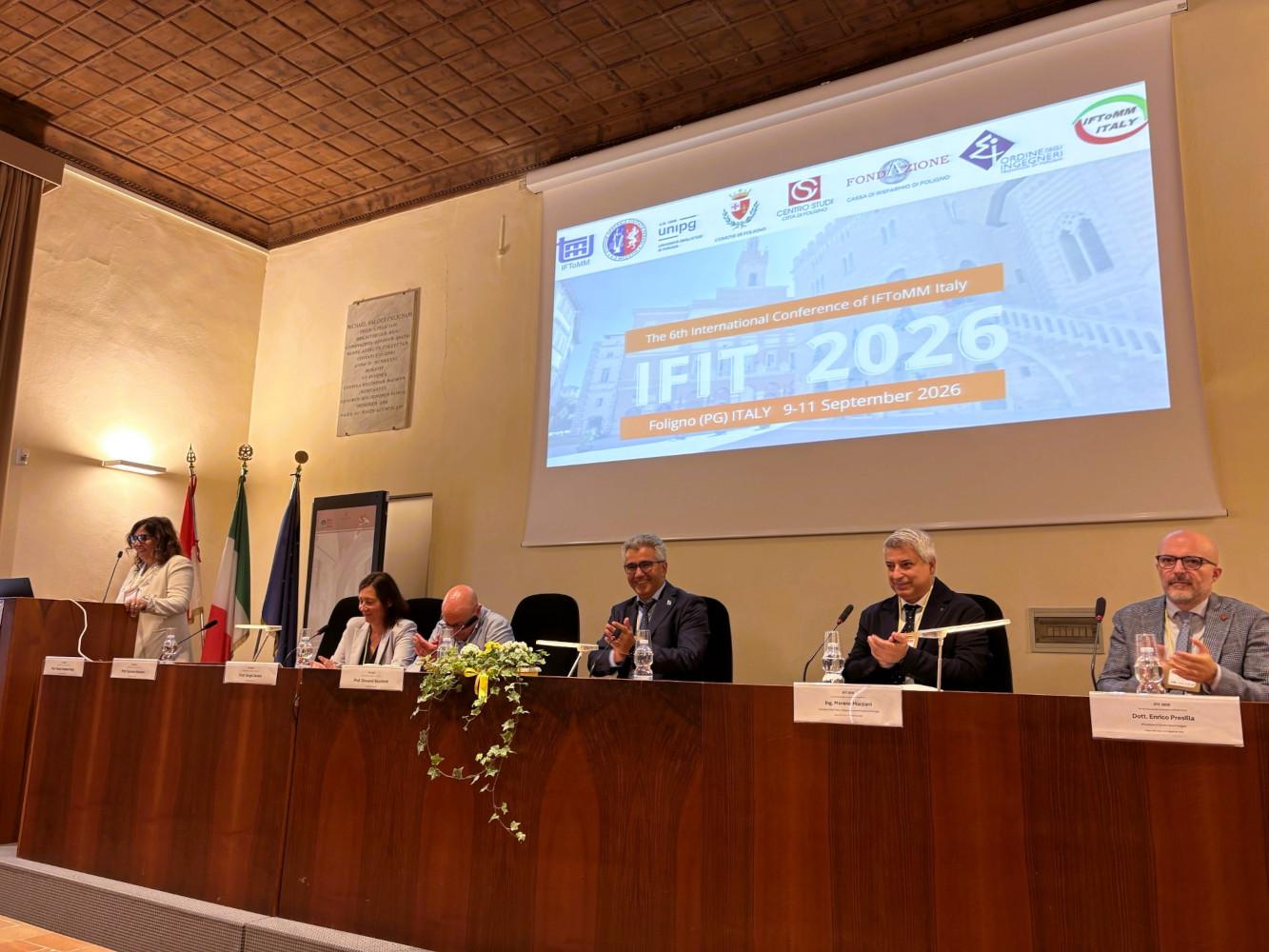
The opening day, 9 September, began at Palazzo Trinci with the official opening ceremony and the plenary lectures, while the scientific sessions continued at the University of Perugia premises at the Centro Studi Città di Foligno. Over the three days, researchers presented and discussed the latest theoretical and experimental results in the field, providing opportunities for exchange among international research groups and fostering new collaborations between universities and industry.
Three plenary lectures were delivered by internationally renowned academics and professionals. prof. Paulo Flores, from the University of Minho, addressed the engagement of Generation Z in the study of machines and mechanisms through student-centred teaching approaches; prof. Masaharu Komori, from Kyoto University, presented a lecture on Riding Robotics and Ability Mining. The relationship between academic research and industry was also represented by eng. Luca Galletti, from Officine Meccaniche Galletti – O.M.G. S.r.l. in Perugia, who presented the milestones of the company’s collaboration with the University of Perugia in the field of Mechanism and Machine Science.
The dialogue between scientific research and industry was indeed one of the central elements of the event, together with the international dimension of the conference and the opportunity to bring together different experiences, methodologies and fields of application.
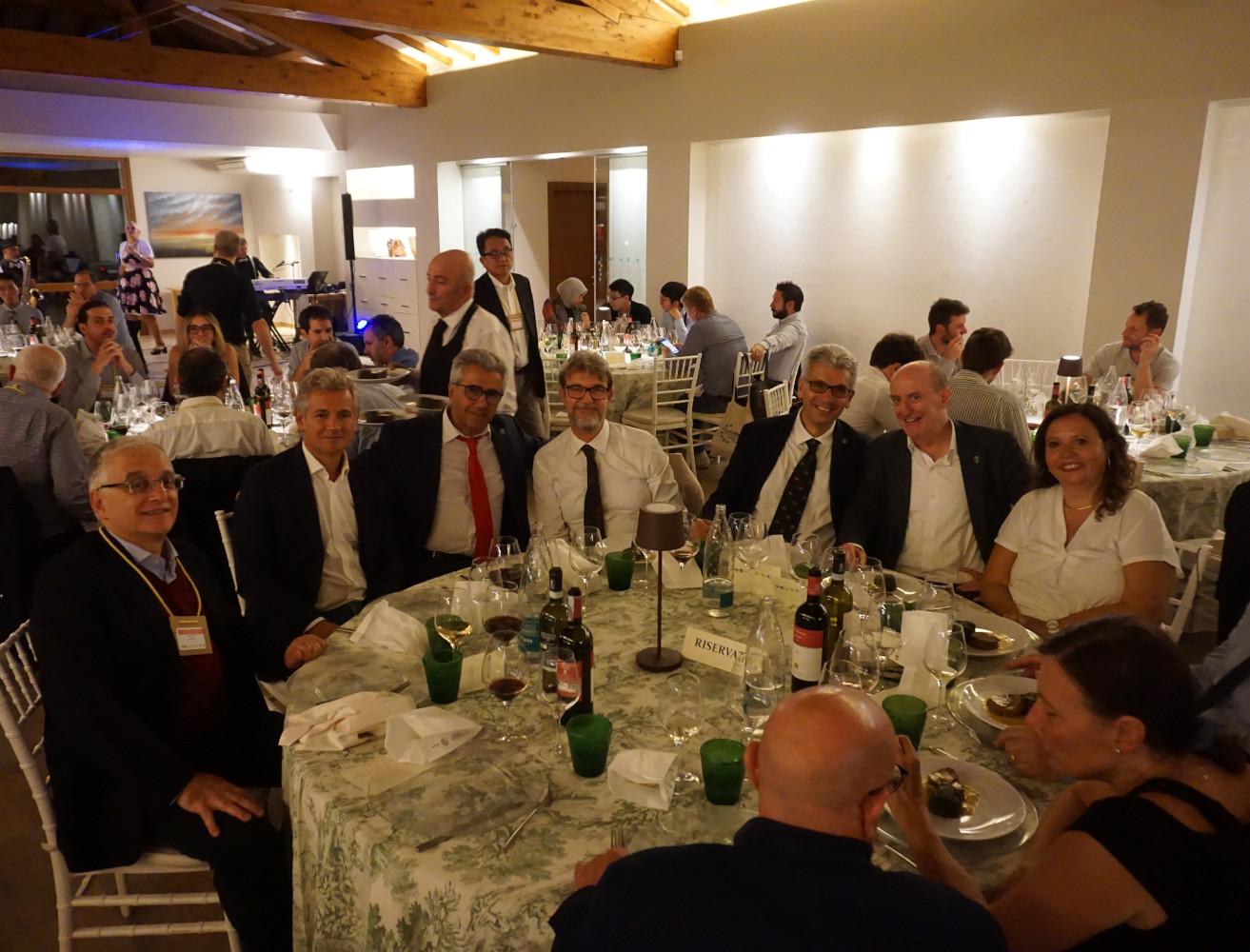
During the Gala Dinner, which was attended by the Deputy-Rector of the University of Perugia, prof. Alceo Macchioni, the award ceremony for the best scientific contributions presented during the conference also took place.
IFIT 2026 was held under the patronage of the University of Perugia, the Order of Engineers of the Province of Perugia, the Municipality of Foligno, the Fondazione Cassa di Risparmio di Foligno, and the Centro Studi Città di Foligno.
Dear Students,
The Systems Mechanics course will start on Wednesday, 23 September. Therefore, the class scheduled for Monday, 21 September will not take place.
Course catalogue for the Academic Year 2026/2027 is online.
The catalogue lists the bachelor's degree programs, master's degree programs, and single-cycle master's degree programs activated for the new academic year, along with the admission criteria, administrative deadlines as well as details for enrolment and registration.
The catalogue is available online through the following link.
We kindly inform our prospective students that starting from August 3, 2026, the enrolment procedures for the university's bachelor's degree programs with open access are now open. Enrolment applications shall be submitted by October 20, 2026. The enrolment procedures for master's degree programs are also open, with the final deadline set for March 1, 2027.
The University provides assistance service through an online ticketing service as well as in person guidance both at the Perugia campus (Rectorate building) and at the Terni campus. The service is available Mon-Fri from 9:00 AM to 1:00 PM.
For furthher information please visit: https://www.unipg.it/en/courses/admission
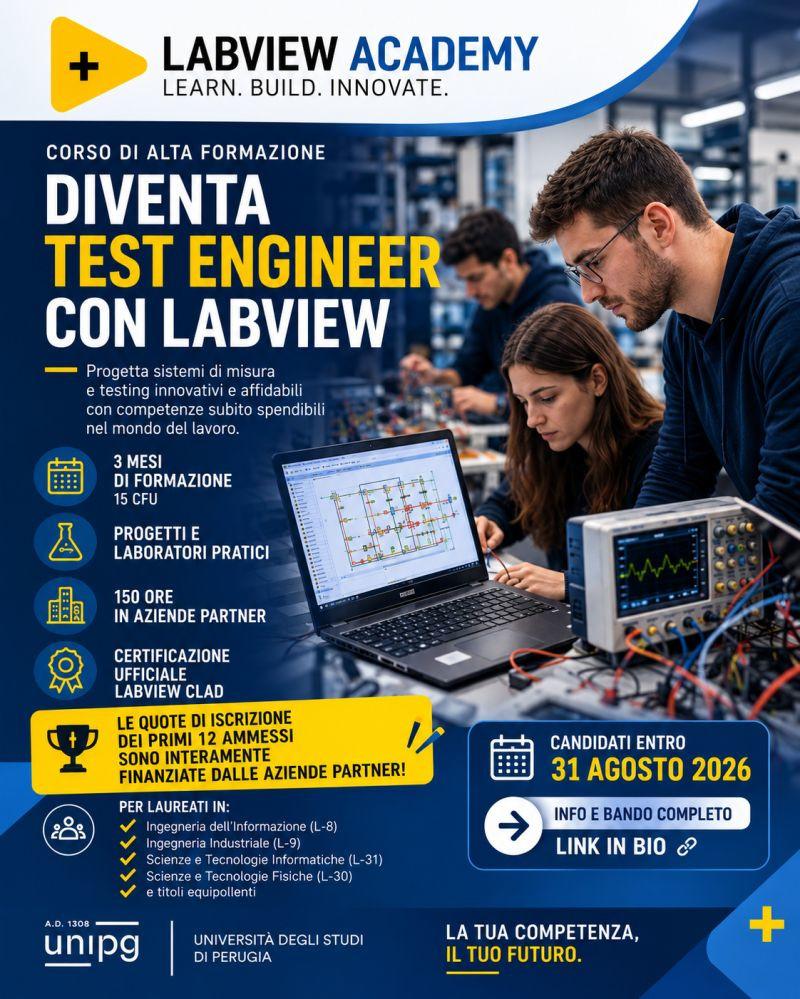
Applications are open for the Advanced Training Course "LabVIEW and Testing Technologies Academy".
The program is designed to train highly qualified professionals in the field of measurement systems, testing, and automation, through an industry-oriented, hands-on approach.
The course includes:
- 3 months of training (15 ECTS) laboratories and applied projects
- 150 hours of activities at partner companies
- Official LabVIEW CLAD certification
We welcome applications from BSc graduates in Information Engineering, Industrial Engineering, Computer Science and Engineering, Physical Sciences and Technologie, or equivalent degrres.
The first twelve students accepted into the course will receive a 100% tuition waiver. The aid is supported by the partner companies - Asterisco Tech, CBL Electronics, EN4, Pragma Engineering Srl, NI (National Instruments).
Deadline for submitting applications: August 31, 2026.
All the details and the complete announcement are available on the University of Perugia's website.
Sono aperte le candidature per il Corso di Perfezionamento di Alta Formazione "LabVIEW and Testing Technologies Academy" dell'Università degli Studi di Perugia.
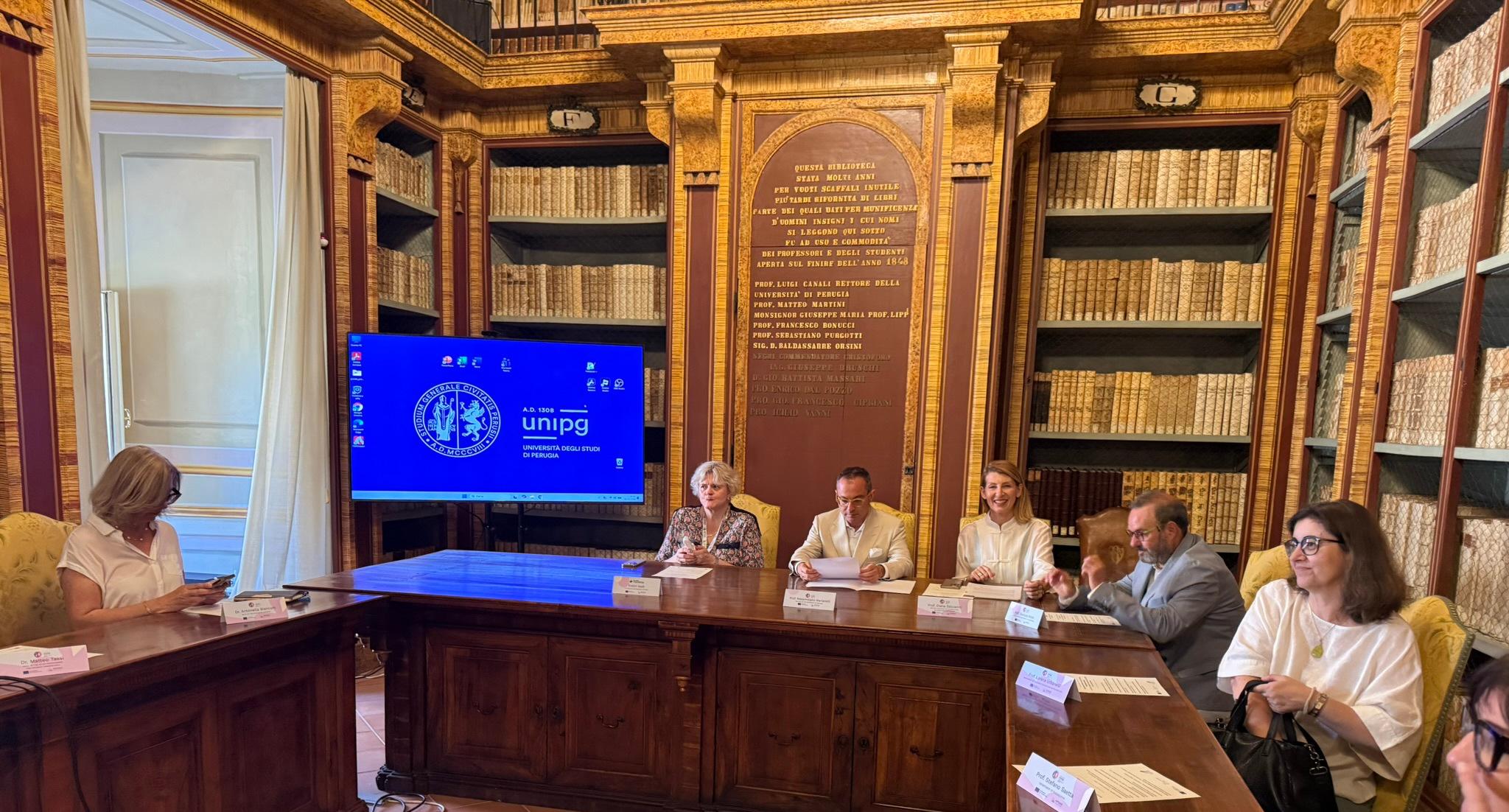
The Bachelor in Engineering Management at the University of Perugia is strengthening its international profile through a new collaboration protocol signed with TTK University of Applied Sciences di Tallinn, Estonia.
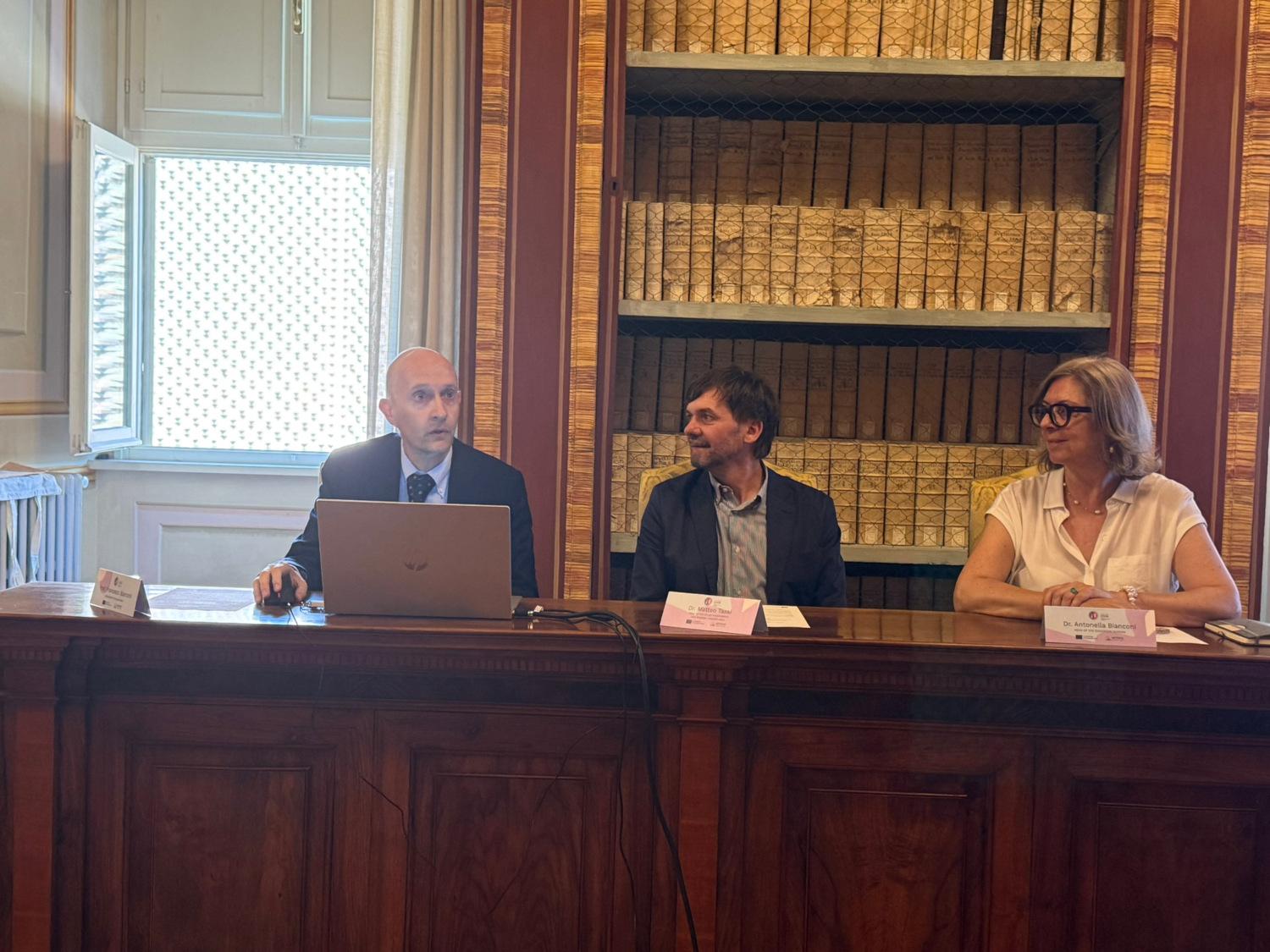
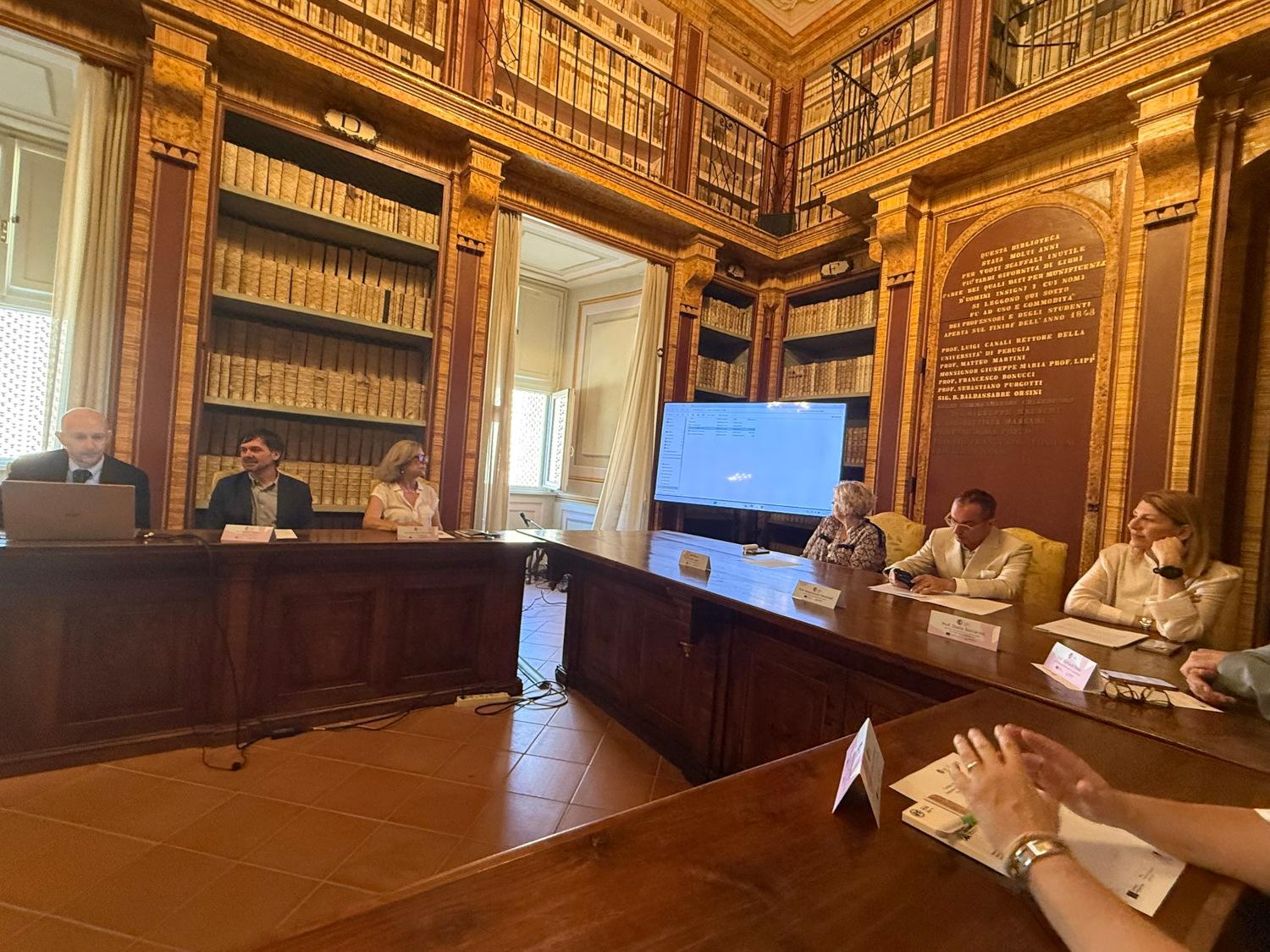
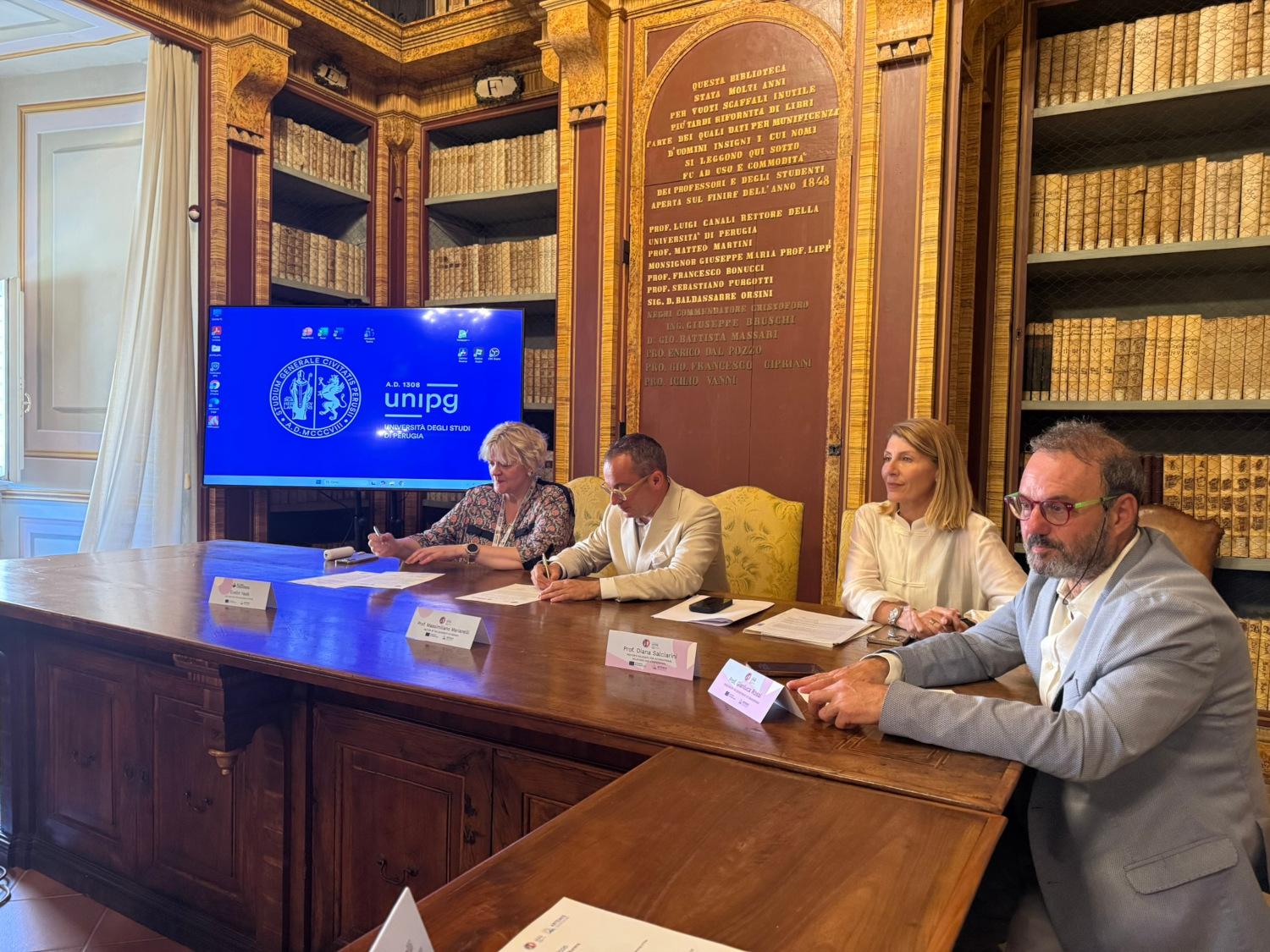
The agreement, signed on June 30, 2026 by Rector Prof. Massimiliano Marianelli and Pro-Rector Prof. Evelin Vaab, between the Bachelor in Engineering Management at the University of Perugia, coordinated by Prof. Stefano Saetta, and the BSc in Production Management and Digitalisation at TTK University of Applied Sciences, led by Prof. Anna Truver.
Thanks to this collaboration, students will have the opportunity to spend one semester at the partner university, earning credits that will be fully recognised without the need for additional validation procedures.
The mobility scheme is part of the Artemis Alliance and will be supported through the Erasmus programme, offering students a valuable opportunity to enrich their academic path with an international, multidisciplinary and innovation-oriented experience.
This is another important step in making the Bachelor in Engineering Management a degree programme increasingly connected to Europe, industry and the skills required by digital transformation.
Agreement representatives:
Prof. Francesco Bianconi for the University of Perugia
Prof.ssa Anna Truver for TTK University of Applied Sciences
Tesi magistrale o triennale - "Sviluppo di un software per valutare i benefici energetici e ambientali delle superfici riflettenti"
Relatori: Walter Didimo e Federico Rossi.
Descrizione sintetica
La tesi è rivolta principalmente a studenti del Corso di Laurea Magistrale in Ingegneria Informatica e Robotica o a studenti del Corso di Laurea Triennale in Ingegneria Informatica ed Elettronica (indirizzo informatico). L'obiettivo, con forte natura applicativa, è lo sviluppo di un software per valutare l'efficacia climatica di superfici riflettenti rispetto a superfici tradizionali, stimando al contempo la quantità di CO2 equivalente compensata. Il software acquisirà dati da un opportuno sistema di misura (albedometro) e fornirà moduli per il calcolo, la visualizzazione grafica e l'esportazione dei dati elaborati.
Si veda l'allegato per maggiori dettagli.
Studio ed implementazione di un sistema per il monitoraggio automatico degli indici di produzione scientifica.
È disponibile una proposta di tesi triennale o magistrale rivolta a studenti di Engineering Management finalizzata alla progettazione ed alla realizzazione di un sistema automatico (e.g., script o dashboard) per il monitoraggio degli indici di produzione scientifica (lavori pubblicati, citazioni, H-index e simili) a partire da database dedicati quali Scopus, Web of Science e analoghi. È richiesta buona conoscenza del linguaggio di programmazione Python.
Per informazioni: federico.alimenti@unipg.it, francesco.bianconi@unipg.it
Analysis and implementation of a tool for automated monitoring scientific production metrics.
A thesis proposal is available for undergraduate or master's students in Engineering Management aimed at designing and developing an automated system (e.g., script or dashboard) for monitoring scientific production indices (published works, citations, H-index, and similar) starting from data available on dedicated platforms such as Scopus, Web of Science and the like. Good knowledge of Python is recommended.
For further information: federico.alimenti@unipg.it, francesco.bianconi@unipg.it
Progetto FLOR - acquisizione dati a bassa risoluzione e misure a 1-bit
È disponibile una proposta di tesi triennale o magistrale finalizzata al progetto e alla realizzazione, mediante dispositivi commerciali, di un digital-to-time converter, che trasformi un numero in un intervallo di tempo con accuratezze confrontabili con 0.1 ns, per il campionamento di segnali in modo non uniforme.
Per informazioni contattare: paolo.carbone@unipg.it
075 5853629 – 348 1516439
Relatore: Prof. Antonio Moschitta
Proposte di tesi da sviluppare in collaborazione con l'azienda Orizzonte Sistemi Navali (https://www.orizzontesn.it/):
- Behavioural Simulation of Complex Systems
This thesis focuses on the modelling and simulation of behavioural aspects of complex systems to analyse how system components interact and evolve under different operational scenarios.
The work investigates how behavioural models, developed within a Model‑Based Systems Engineering (MBSE) framework, can be used to simulate system dynamics, emergent behaviours, and interactions across multiple domains.The objective is to support early validation of system behaviour, risk identification, and performance assessment through scenario‑based simulation, contributing to improved design decisions and system understanding throughout the lifecycle.
- SysML v2 and AI for Text to Model Requirements Translation
This thesis investigates the use of Artificial Intelligence, including Large Language Models, to automatically translate natural language system requirements into SysML v2 model artifacts.The work focuses on Text to Model generation, demonstrating how AI tools can interpret textual requirements and produce valid SysML v2 syntax that can be directly imported into modelling environments.
The objective is to enable faster model creation, reduce manual effort, and improve consistency and traceability within the system engineering workflow. -
Integrating Agile Methods with Model-Based Systems Engineering (MBSE)
This thesis explores how agile development principles can be integrated with Model Based Systems Engineering (MBSE) to address the challenges of complex, multidisciplinary system development.
The work investigates how continuous connectivity enabled by the digital thread can support seamless collaboration across domains and stakeholders, ensuring traceability and coherence among requirements, architecture, behaviour, and validation artifacts throughout the system lifecycle.
By leveraging multidomain simulation and mission driven systems engineering, the proposed approach aims to enable iterative design, early validation, and effective interface management.
The objective is to define an integrated agile MBSE methodology that mitigates technical risks and optimizes system performance across the entire product lifecycle. -
Model reuse
- A Framework for Model Reuse in Complex Systems Engineering
Methodologies for Building Reusable System Model Libraries across Multiple Projects
This thesis aims to define a methodology and a supporting framework for model reuse in complex systems, enabling the creation of system model libraries based on abstraction and generalization principles. The proposed approach will allow models to be effectively shared, adapted, and reused across different projects, reducing development effort and improving consistency and scalability. - Learning Based System Model Libraries for Cross Project Reuse
A Machine Learning Framework for Reusing Engineering Models in Complex Systems
This thesis explores a machine learning based approach to reusing system models across different projects.
The proposed methodology exploits existing engineering models as training data, allowing the system to learn reusable structures, interfaces, behaviours, and requirement patterns without relying on predefined generalization rules.
The result should be an enabling system that supports automatic model reuse and adaptation, reducing manual effort, accelerating model creation, and improving consistency across complex system development programs.
- A Framework for Model Reuse in Complex Systems Engineering